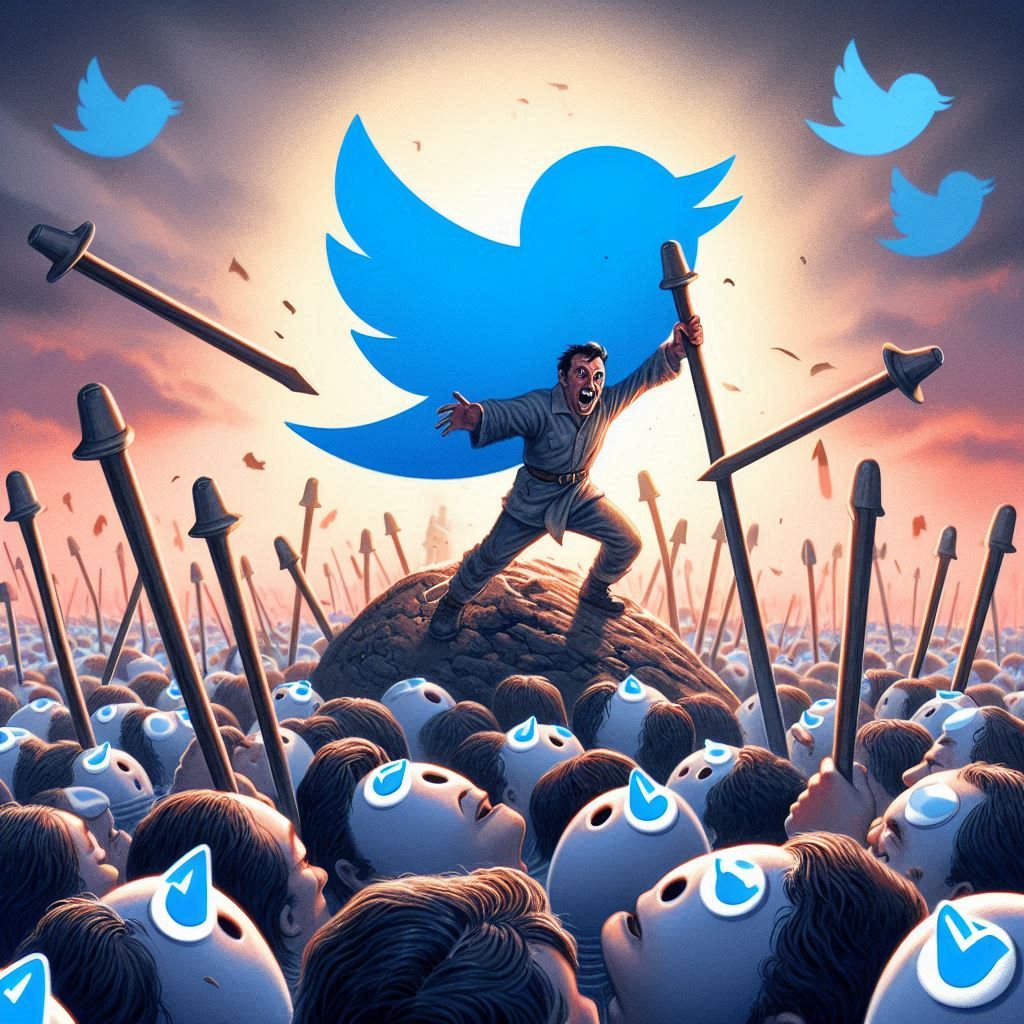
Creating impressive AI-generated images has become an essential skill in 2026, and it all starts with powerful AI image prompts. Whether you’re a content creator, marketer, designer, or simply exploring creative possibilities, learning how to write effective AI image prompts can transform your results from ordinary to extraordinary. The right prompting technique makes all the difference.
Page Contents
In this comprehensive guide, I’ll walk you through seven powerful prompt techniques that consistently deliver outstanding visual results. These aren’t just basic tips—they’re proven strategies that leverage how modern AI image generators understand and interpret your requests.
Why Your Prompts Matter More Than Ever
The quality of your AI-generated images directly depends on how well you communicate your vision. Think of prompts as a bridge between your imagination and the AI’s capabilities. A vague prompt produces generic results, while a well-crafted prompt unlocks stunning, professional-grade imagery.
Let’s dive into the seven essential prompt types that will elevate your AI image creation.
1. The Detailed Scene Builder
This technique focuses on creating rich, immersive environments by layering specific details about setting, lighting, mood, and composition.
The Structure: Start with the main subject, add environmental context, specify lighting conditions, include atmospheric details, and finish with technical specifications.
Example: “A cozy bookstore interior during golden hour, warm sunlight streaming through tall Victorian windows, dust particles visible in light beams, wooden shelves packed with colorful book spines, a leather reading chair in the foreground, soft bokeh effect, photorealistic style, 35mm lens perspective”
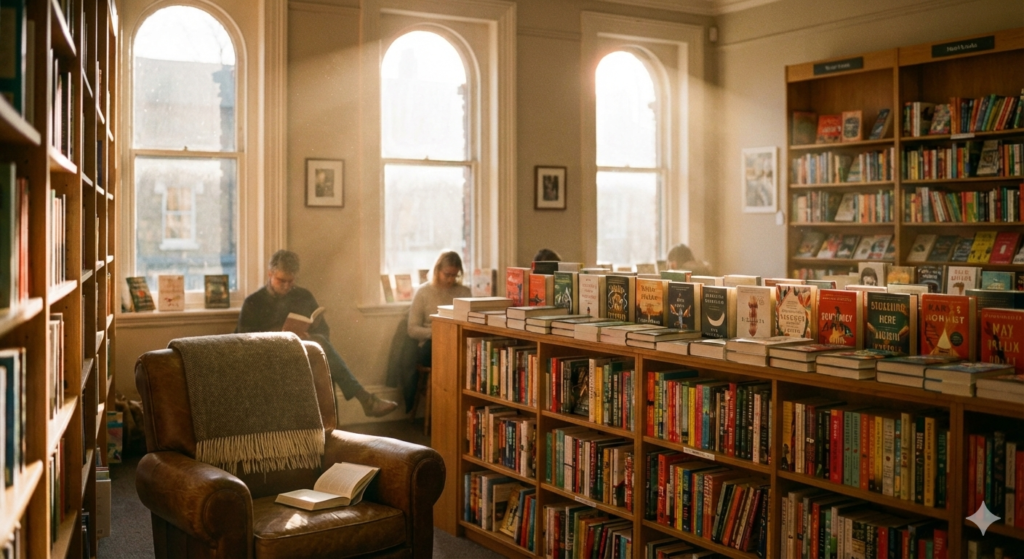
Why It Works: By providing multiple sensory details and technical elements, you guide the AI toward a cohesive vision rather than leaving gaps for interpretation.
2. The Style Fusion Approach
Combining different artistic styles, movements, or mediums creates unique and eye-catching results that stand out from generic AI images.
The Structure: Specify your subject, then blend two or three distinct artistic influences, periods, or techniques.
Example: “Mountain landscape combining the bold colors of Fauvism with the geometric patterns of Art Deco and the texture of impasto oil painting, vibrant sunset palette, dramatic angular peaks”
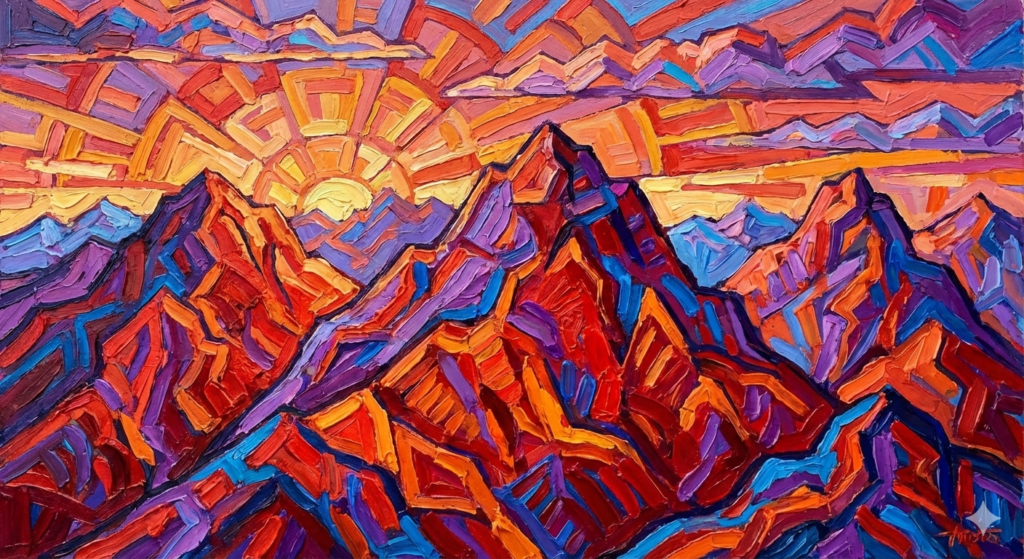
Why It Works: Style fusion prevents your images from looking like typical AI art by creating distinctive visual signatures that are harder to replicate.
3. The Emotion-Driven Portrait
When creating character or portrait images, focusing on emotional depth and psychological nuance produces more compelling, human-centered results.
The Structure: Define the subject, emphasize facial expression and body language, describe the emotional atmosphere, add contextual elements that reinforce the mood.
Example: “Close-up portrait of an elderly woman with knowing eyes, gentle smile lines suggesting a lifetime of kindness, soft natural window light creating subtle shadows, worn hands holding a faded photograph, atmosphere of nostalgic warmth and quiet wisdom, shallow depth of field”
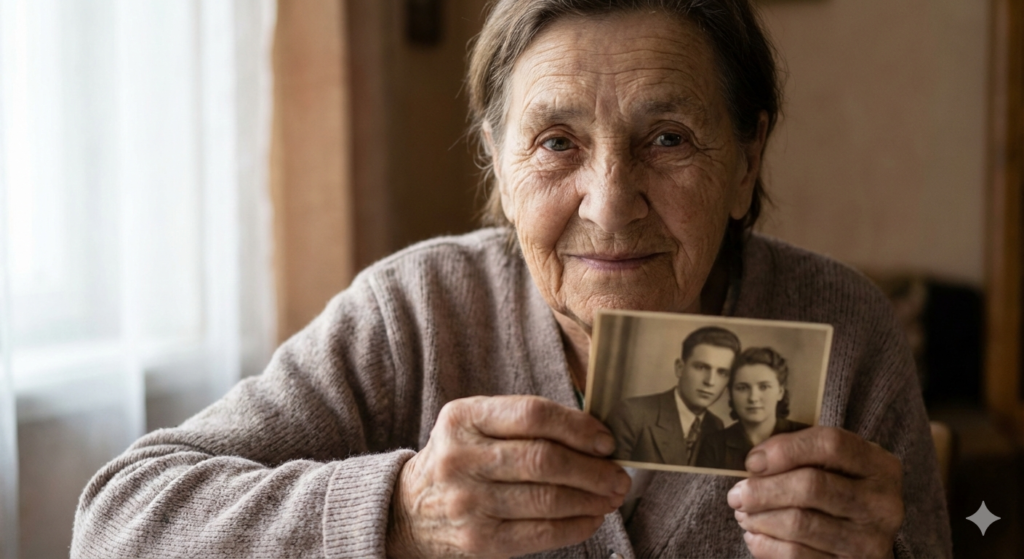
Why It Works: Emotion-centered prompts create images with narrative weight and psychological resonance that viewers connect with on a deeper level.
4. The Cinematic Moment Capture
This technique borrows from filmmaking principles to create dramatic, story-rich single frames that feel like they’re pulled from a movie.
The Structure: Describe the scene as if directing a film shot, include camera angle, framing, moment of action, dramatic lighting, and cinematic mood.
Example: “Low angle shot of a lone figure standing at the edge of a skyscraper rooftop at night, city lights sprawling below, wind whipping their coat, storm clouds gathering overhead, neon signs reflecting in puddles, cinematic color grading with teal and orange tones, anamorphic lens flare”
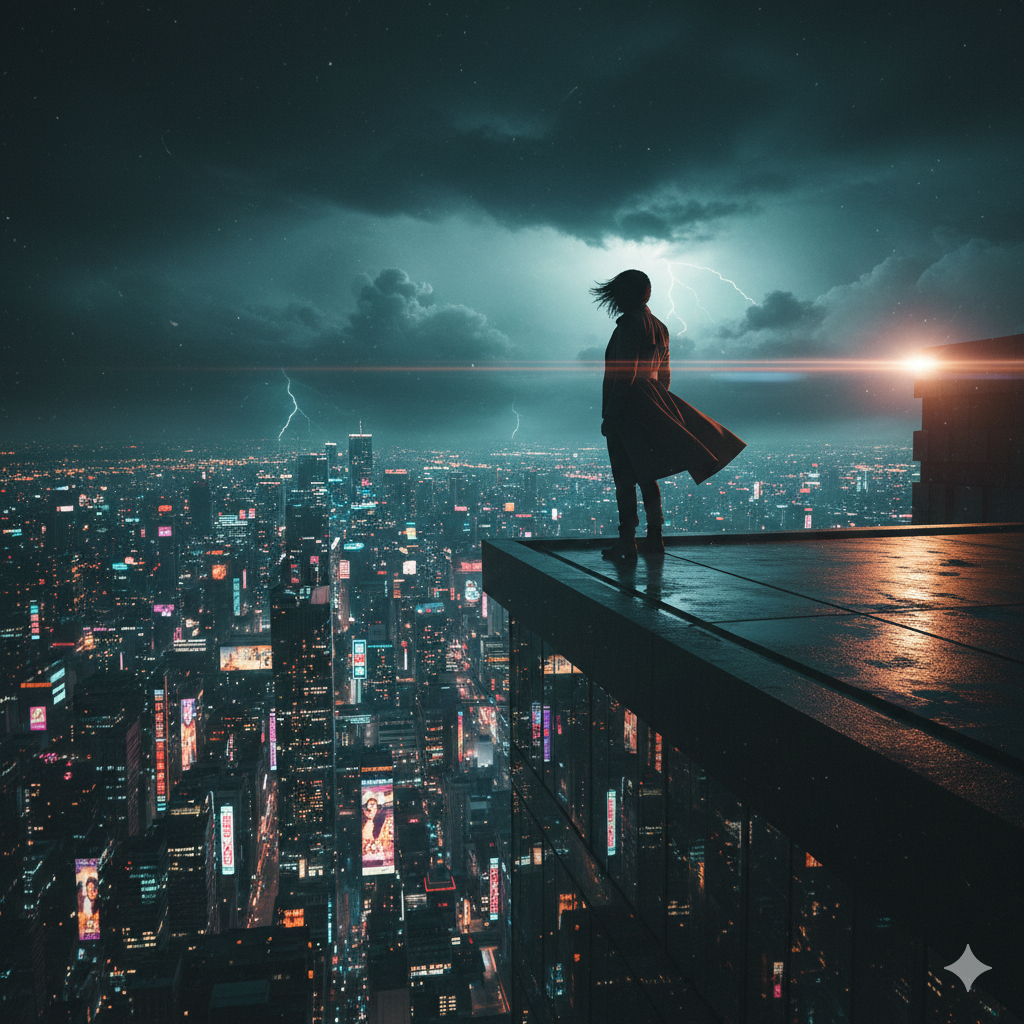
Why It Works: Cinematic language triggers the AI’s understanding of visual storytelling conventions, resulting in more dynamic and professionally composed images.
5. The Hyperspecific Product Visualization
For commercial applications, precise technical specifications combined with aspirational lifestyle context produces marketing-ready imagery.
The Structure: Detail the product accurately, specify materials and textures, set it in an appealing context, add professional photography elements.
Example: “Minimalist ceramic coffee mug in matte sage green, smooth glazed finish, positioned on a marble countertop beside an open laptop and succulent plant, soft morning light from the left, clean Scandinavian aesthetic, product photography with neutral background blur, commercial quality”

Why It Works: Combining technical precision with lifestyle context creates images that are both accurate and aspirational, perfect for marketing materials.
6. The Abstract Concept Translator
Turning intangible ideas, emotions, or concepts into visual metaphors challenges the AI in creative ways that often yield surprising and powerful results.
The Structure: Name the abstract concept, provide concrete visual metaphors, specify colors and forms that represent the idea, add symbolic elements.
Example: “Visual representation of ‘innovation breaking through barriers,’ shattered glass fragments suspended in mid-air forming the shape of a lightbulb, electric blue and white energy crackling through the cracks, dark background transitioning to bright light, dynamic composition suggesting explosive movement”
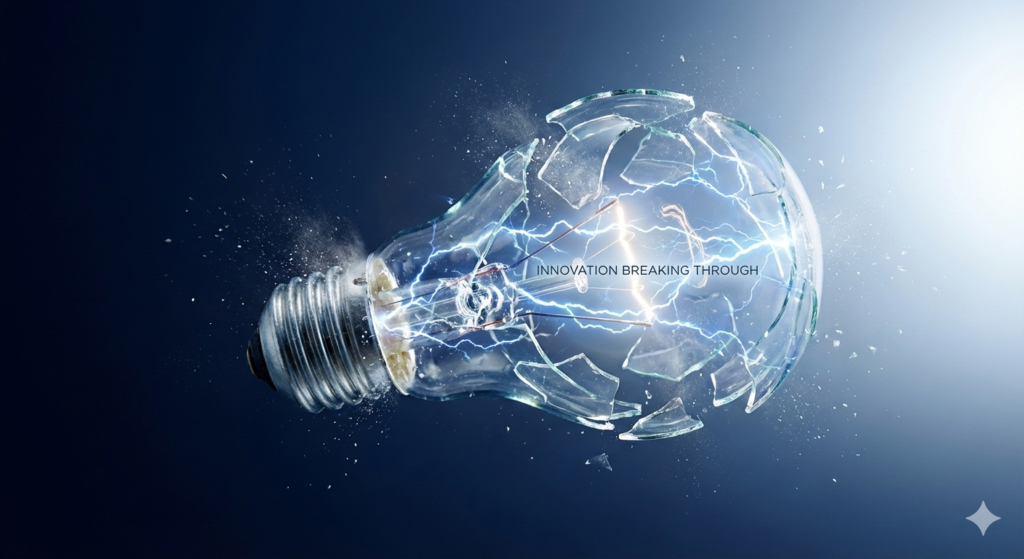
Why It Works: Abstract prompts encourage the AI to make creative interpretive choices while your metaphorical guidance keeps the result aligned with your intended meaning.
7. The Period-Authentic Historical Recreation
Creating historically accurate scenes requires careful attention to period-specific details, architecture, clothing, and atmospheric qualities.
The Structure: Specify the exact time period and location, include authentic architectural or environmental details, describe period-appropriate clothing and objects, mention historical photography or art styles of that era.
Example: “Street scene in Victorian London 1880s, gas lamp posts casting warm glow on cobblestone streets, horse-drawn carriages, people in authentic period dress with top hats and long coats, brick buildings with ornate iron railings, early evening fog rolling in, sepia-toned photographic quality reminiscent of early photography”
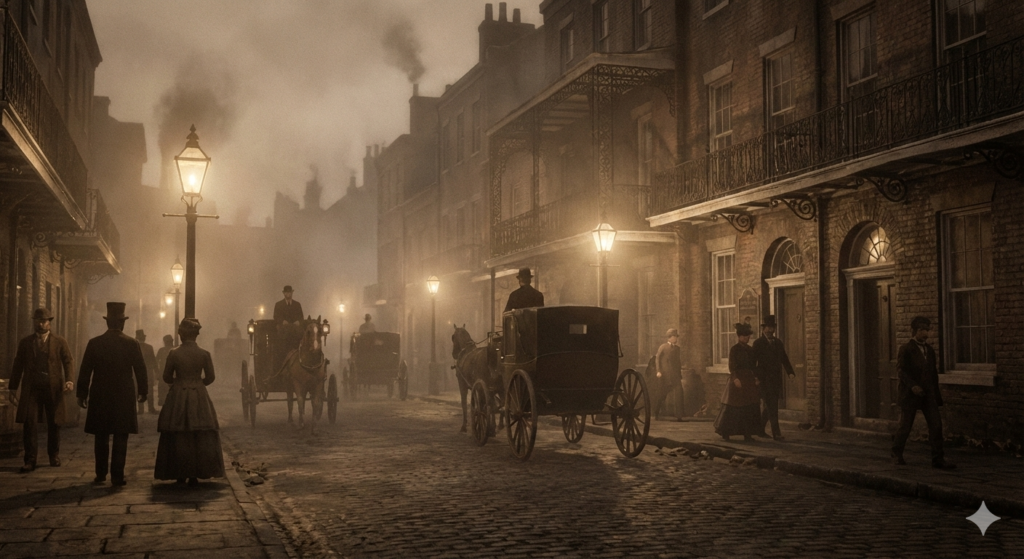
Why It Works: Historical specificity prevents anachronistic elements from appearing and creates images with educational or documentary value alongside their aesthetic appeal.
Pro Tips for Any Prompt Type
Regardless of which approach you choose, these universal principles will improve your results:
- Be specific without being restrictive. Provide clear direction while leaving room for the AI to make aesthetic choices within your parameters.
- Use visual reference language. Terms like “bokeh,” “golden hour,” “rule of thirds,” or “chiaroscuro lighting” tap into established photographic and artistic concepts the AI recognizes.
- Order matters. Place your most important elements early in the prompt, as AI systems often weight earlier information more heavily.
- Iterate and refine. Start with a core concept, generate an image, then modify your prompt based on what worked and what didn’t.
- Consider composition explicitly. Mentioning foreground, middle ground, and background elements helps create depth and professional composition.
Common Mistakes to Avoid
Even experienced creators sometimes fall into these traps: Creating prompts that are too short and vague leads to generic results. Conversely, extremely long prompts with conflicting instructions can confuse the system. Forgetting to specify style or medium leaves too much to chance. Neglecting lighting and atmosphere details misses opportunities for mood creation. Using contradictory descriptors produces muddled images.
Bringing It All Together
Mastering AI image generation in 2026 isn’t about finding a magic formula, it’s about understanding how to communicate effectively with these powerful tools. Each of these seven prompt types serves different creative needs, and you can even combine elements from multiple approaches for more complex projects.
The key is practice and observation. Pay attention to which elements of your prompts produce the desired effects and build your own library of effective phrases and structures. The more you experiment, the more intuitive the process becomes.
Start with one technique that aligns with your current project needs. Test variations, take notes on what works, and gradually expand your prompting vocabulary. The images you can create are limited only by how clearly you can envision and describe them.
What will you create today?

Parvesh Sandila is a results-driven tech professional with 8+ years of experience in web and mobile development, leadership, and emerging technologies.
After completing his Master’s in Computer Applications (MCA), he began his journey as a programming mentor, guiding 100+ students and helping them build strong foundations in coding. In 2019, he founded Owlbuddy.com, a platform dedicated to providing free, high-quality programming tutorials for aspiring developers.
He then transitioned into a full-time programmer, where his hands-on expertise and problem-solving skills led him to grow into a Team Lead and Technical Project Manager, successfully delivering scalable web and mobile solutions. Today, he works with advanced technologies such as AI systems, RAG architectures, and modern digital solutions, while also collaborating through a strategic partnership with Technobae (UK) to build next-generation products.